
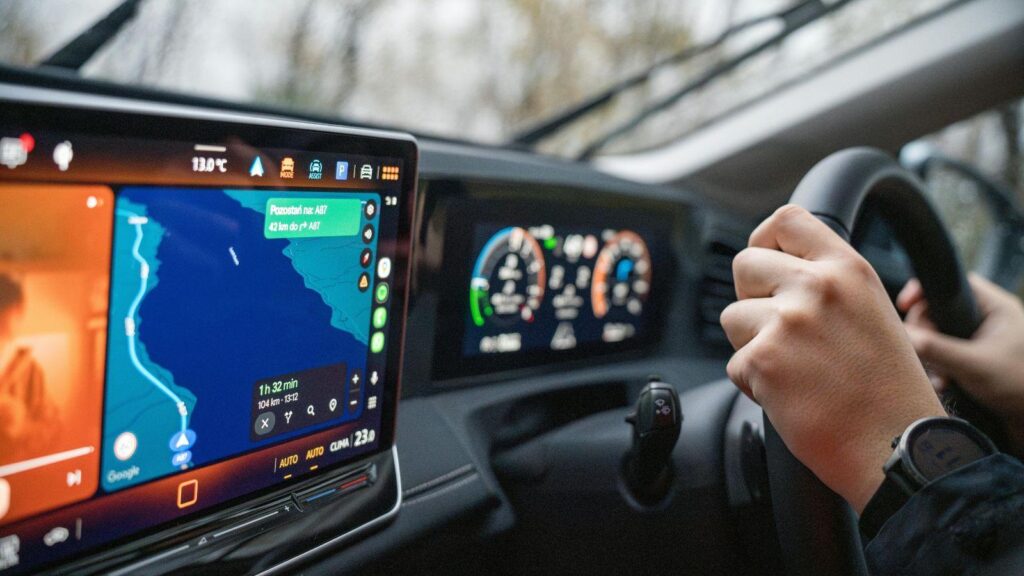
Modern vehicle technology is transforming how we navigate our daily commutes, offering unprecedented layers of safety and convenience. Advanced Driver-Assistance Systems (ADAS)—like adaptive cruise control, lane-keeping assist, and automatic emergency braking—have become standard features on vehicles rolling off assembly lines today. These systems act as an extra set of eyes, continuously scanning the road to prevent accidents before they happen.
However, no matter how sophisticated a vehicle’s software becomes, it cannot completely replace the situational awareness of a human driver. This reality is especially true in complex urban environments like Chicago. From sudden weather changes to unpredictable traffic patterns, the Windy City presents unique challenges that require drivers to remain fully engaged, even when their vehicles are equipped with the latest smart technology.
How Modern Driver-Assist Technology Protects Drivers
Driver-assist features protect motorists by actively monitoring the vehicle’s immediate surroundings to mitigate or entirely avoid collisions. These systems rely on a network of cameras, radar sensors, and ultrasonic equipment to track speed, lane position, and proximity to other objects. When the system detects a hazard, it can warn the driver or take corrective action, such as applying the brakes.
According to data from the Insurance Institute for Highway Safety (IIHS), vehicles equipped with automatic emergency braking and forward collision warning systems experience a 50% reduction in front-to-rear crashes. These technologies are exceptionally reliable on predictable, well-marked highways where traffic flows in a uniform direction.
Key safety features built into modern commuter vehicles include:
- Automatic Emergency Braking (AEB): Instantly applies stopping power if a forward collision is imminent and the driver fails to react.
- Blind Spot Information Systems (BLIS): Alerts drivers to vehicles traveling in their hard-to-see quarters during lane changes.
- Evasive Steering Assist: Provides additional steering support when a driver initiates a sudden maneuver to avoid a stopped vehicle ahead.
The Specific Challenges of Navigating Chicago Infrastructure
Chicago infrastructure introduces unique layout complexities that frequently push driver-assist sensors to their technological limits. The city’s famous grid system is interspersed with multi-level roadways, massive construction zones, and tight multi-lane corridors that confuse standard camera calibrations. When a vehicle’s software cannot clearly identify the boundaries of a path, it temporarily disables itself, returning full control to the person behind the wheel without warning.
Consider Lower Wacker Drive. The subterranean roadway completely cuts off GPS signals and creates dramatic lighting transitions that can temporarily blind optical sensors. Additionally, high-contrast shadows on bright afternoons can cause a vehicle’s forward-collision system to mistake a harmless shadow for a solid obstacle, triggering sudden, unexpected “phantom braking.”
“Urban driving involves an overwhelming amount of visual noise. Potholes, faded paint lines, and tight construction detours on the Dan Ryan Expressway require real-time problem solving that algorithms simply aren’t equipped to handle yet.”
Why Human Judgment Outperforms Algorithms in Dense City Traffic
Human judgment remains superior in city traffic because people can interpret context, read body language, and anticipate unpredictable behavior. An algorithm processes the world purely as mathematical data points—calculating the distance and speed of a nearby object. Humans, on the other hand, can spot a distracted pedestrian looking at a smartphone or notice a delivery truck idling with its hazard lights on and instinctively know to slow down before any sensor triggers an alarm.
When technology miscalculates an urban hazard and a collision occurs, sorting out liability gets complicated quickly. If you are injured because another driver over-relied on their tech and caused a crash, getting professional help with an auto accident claim is often necessary to ensure your medical expenses and vehicle repairs are covered.
Chicago driving requires navigating a dense mix of variables simultaneously, including:
- Cyclists and Scooters: Sudden lane splitting and unpredictable movements that radar sensors can struggle to track accurately.
- Heavy Pedestrian Corridors: Crowded crosswalks in areas like the Loop, where foot traffic frequently spills past the curb line.
- Aggressive Merging: The tight, fast-paced merging sequences required at major interchanges like the Jane Byrne Interchange.
Statistical trends highlight this gap between automated logic and urban reality. The National Highway Traffic Safety Administration (NHTSA) notes that while driver-assist features reduce highway incidents, urban intersection collisions have remained stubborn, largely due to the sheer volume of chaotic, localized variables that automation cannot forecast.
What to Do Following an Urban Traffic Collision
If you are involved in a collision on a Chicago roadway, your immediate priorities must be safety, documentation, and protecting your legal rights. Even with active safety features engaged, accidents happen in the blink of an eye due to the negligence of other drivers. Taking the correct steps at the scene ensures everyone remains safe and preserves the evidence required for insurance verification.
The immediate steps to take at the scene of a collision include:
- Move to Safety: If possible, steer your vehicle to the shoulder or a well-lit parking lot to avoid secondary impacts.
- Check for Injuries: Assess yourself and your passengers, then call 911 immediately to request medical attention and a police response.
- Document the Scene: Photograph vehicle damage, license plates, street signs, and any obscured lane markings or traffic signals.
- Exchange Credentials: Collect names, phone numbers, insurance policies, and driver’s license numbers from everyone involved.
Navigating the Legal Complexities of a Chicago Car Accident
Resolving a car accident claim in Cook County involves navigating intricate insurance rules and establishing clear fault. Illinois operates under a modified comparative negligence system, meaning a driver can recover damages as long as they are less than 50% at fault for the incident. When an accident involves driver-assist technology, insurance companies often try to complicate the process by debating whether the driver or the vehicle technology was responsible for the failure to avoid the crash.
For those dealing with injuries, medical bills, and disputed liability after a crash, working with a professional legal team provides dedicated representation for local motorists. Experienced legal teams understand how local courts handle urban traffic incidents and can help you collect the necessary data—including vehicle black box records—to prove your case. Working with a professional gives you access to a dedicated advocate who knows how to handle insurance adjusters who try to minimize your losses.
To learn more about how comprehensive safety tech bundles perform under rigorous industry tracking, you can review the latest active safety evaluations published directly by the Insurance Institute for Highway Safety (IIHS). Understanding these benchmarks highlights why keeping your eyes on the road matters, even when advanced systems are actively running in the background. For more technical deep dives on how these systems integrate into modern commuter vehicles, check out our comprehensive guide on understanding BlueCruise limits and driver responsibility to ensure you are maximizing safety on your next trip.
Tips for Balancing Vehicle Technology and Active Awareness
To maximize safety, drivers must treat driver-assist features as a supportive safety net rather than an autopilot system. Staying safe on dense city streets means keeping your hands on the wheel and your mind on the environment, using technology to enhance your awareness rather than dull it.
Practices for maintaining proper situational control include:
- Keep Sensors Clear: Regularly clean your vehicle’s windshield, front grille, and bumpers to remove dirt, road salt, and snow that block camera and radar fields of view.
- Understand System Limits: Read your vehicle’s manual to learn exactly what your driver-assist package can and cannot do—especially regarding stop-and-go city traffic.
- Expect the Unexpected: Always be ready to take over steering or braking instantly if the system encounters faded lane lines or complex construction barriers.