Moving from prototype to production often exposes a practical gap in the manufacturing process. Early-stage product development frequently relies on 3D printing or CNC machining to validate geometry and functionality. However, once designs stabilize, these methods can become inefficient for producing larger quantities.
At the same time, injection molding typically becomes cost-effective only at higher production volumes, where the expense of hardened tooling can be justified. Engineers often need somewhere between 10 and 100 parts for functional testing, pilot builds, or early market validation, but injection mold tooling can take weeks and require significant upfront investment.
Urethane casting helps bridge this gap by enabling small batches of production-quality plastic parts before committing to hard tooling.
What Exactly Is Urethane Casting?
Using a urethane casting service is a smart choice for low-volume manufacturing to produce high-quality plastic parts using silicone molds and liquid polyurethane resins when the limits of time and cost are short. The process typically begins with a master model, which is often produced using CNC machining or high-resolution 3D printing.
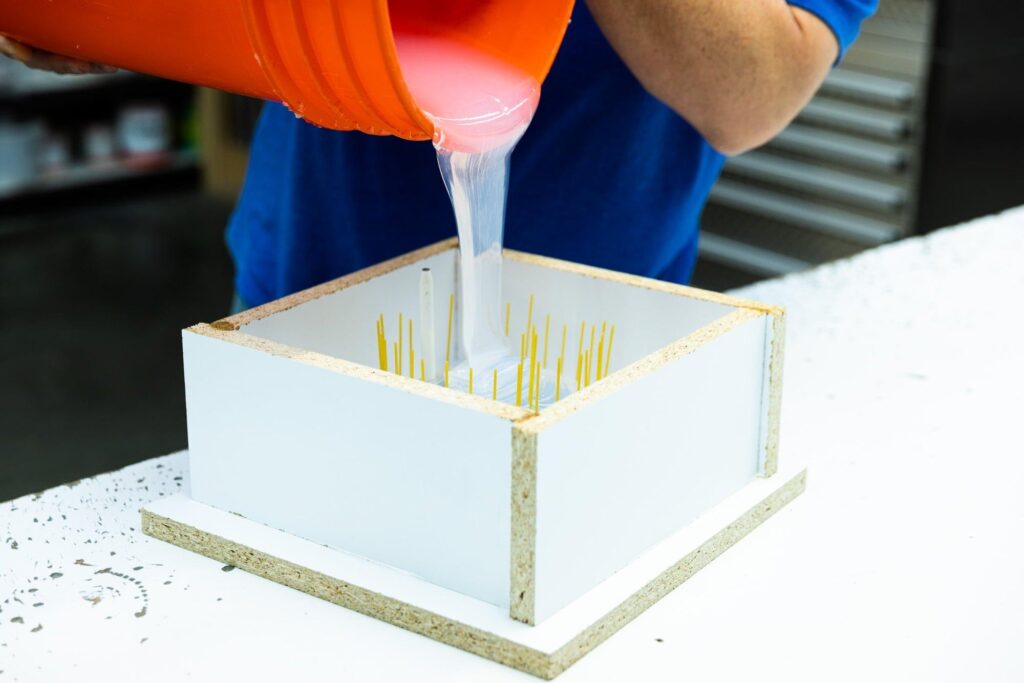
From this master, a flexible silicone mold is created to capture the part’s geometry and surface details. During production, polyurethane resin is poured into the mold under vacuum conditions, which helps eliminate air bubbles and ensures accurate replication of fine features.
After curing, the mold is opened and the finished part is removed. Because silicone molds can typically produce 10–100 parts before degradation, urethane casting works well for short production runs, effectively bridging the gap between prototyping methods and full-scale injection molding.
Materials Used in Urethane Casting
Polyurethane resins used in urethane casting are engineered to replicate the mechanical and visual properties of many common thermoplastics. Depending on the formulation, these materials can simulate plastics such as ABS, polypropylene, and polycarbonate, as well as rubber-like elastomers for flexible components.
When selecting a material, engineers typically evaluate properties such as hardness (measured on the Shore A or Shore D scale), tensile strength, flexibility, temperature resistance, and surface finish quality. Many urethane systems also support custom pigmentation, allowing parts to match final product colors, along with options for clear or translucent components.
In some cases, the process can even approximate overmolding conditions by combining materials with different hardness levels. This versatility enables teams to evaluate functional performance and visual characteristics before committing to expensive injection mold tooling.
Key Applications for Urethane Casting
Urethane casting is widely used in product development when engineers need parts that closely resemble final production components. One common application is functional prototyping, where parts are used for mechanical testing, fit and assembly verification, and overall design validation. Because polyurethane materials can mimic many thermoplastics, these prototypes often behave similarly to injection-molded parts.
The process is also valuable for pre-production and pilot runs, allowing teams to manufacture limited batches before investing in injection mold tooling. These parts may support beta hardware programs, field testing units, or early product launches.
In some cases, urethane casting is used for low-volume end-use components, particularly when annual demand is relatively small. Industries such as medical devices, robotics, aerospace interiors, and consumer electronics frequently rely on the process to produce realistic parts with production-like materials and surface finishes.
Advantages of Using a Urethane Casting Service
Engineers often choose urethane casting because it offers a practical balance between speed, cost, and part quality during early manufacturing stages. One major advantage is faster tooling. Silicone molds used in urethane casting can typically be produced in just a few days, whereas injection mold tooling may take several weeks to design and manufacture.
The process also involves lower upfront costs since soft silicone molds are far less expensive than hardened steel tooling. Despite the simpler tooling, urethane casting can achieve high cosmetic quality, accurately reproducing smooth surfaces, fine details, and complex geometries through vacuum casting.
Another benefit is material versatility. Polyurethane formulations can simulate the mechanical properties of many thermoplastics, giving engineers realistic test parts. Because molds are relatively inexpensive, design iterations can be implemented quickly, making urethane casting especially valuable during design validation and early production planning.