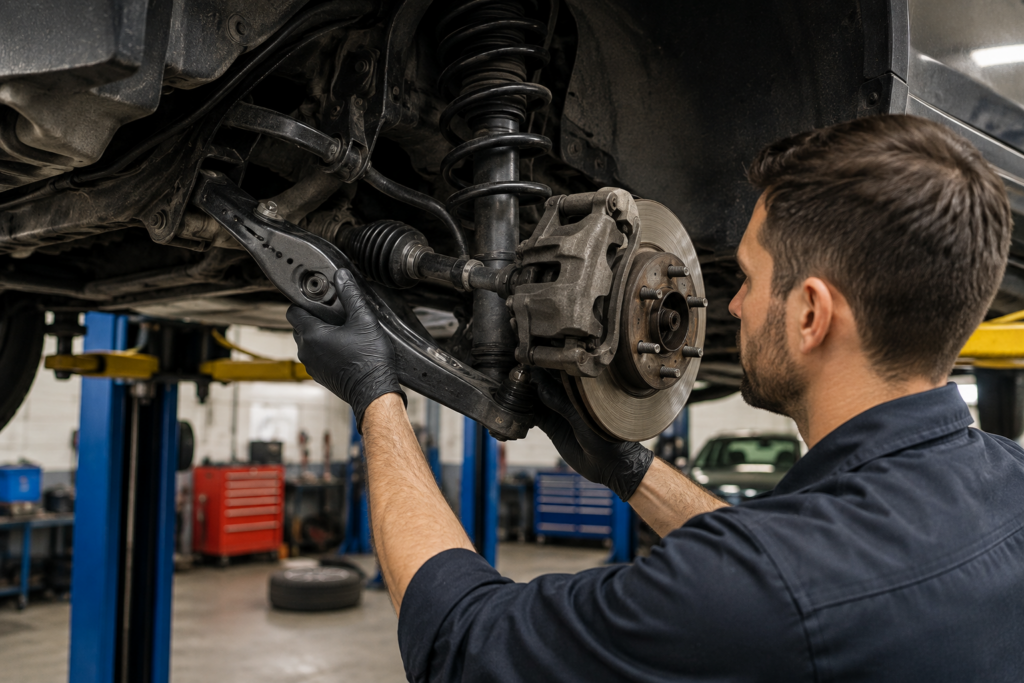
A vehicle should provide stability, predictability, and comfort on the road. It means that the car’s suspension should be in excellent condition at all times. Suspension repair Edmonton can help you understand the warning signs, diagnosis, and solutions for your vehicle’s suspension problems.
Frequent suspension repair is the reason you have comfort on the road and stability during acceleration, braking, and on different road conditions.
Understanding Your Vehicle’s Suspension System
The vehicle suspension supports the chassis and, with the wheels attached, absorbs road shocks. It enables both springing and control of the sprung weight.
If the road is defective, uneven surfaces will shake your vehicle. Springs, shock absorbers, and other suspension systems allow a vehicle to handle road conditions.
The vehicle suspension manages body motion during acceleration and braking to maintain stability and preserve control of the car.
The Different Parts that Make up the Suspension in Your Vehicle
The different parts that make up the suspension system in your vehicle include:
-
Springs
These parts bear the weight of the vehicle. They also compress when the vehicle hits an uneven road surface and bounce back to restore the vehicle’s normal weight.
-
Shock Absorbers
The shock absorbers control how quickly these springs bounce up and down during acceleration, braking, and hitting bumps in the road. When they are faulty, the springs will tend to oscillate for an extended period, thereby shaking the vehicle. Without shock absorbers, the vehicle is very unsafe because the springs will oscillate excessively when hitting bumps in the road.
-
Struts
Some vehicles have struts that combine shocks and springs into a single unit.
-
Control Arms
These are the links that attach the suspension system to the vehicle’s frame.
Reasons to Be Concerned about Suspension Repair
The wear and tear on your suspension system occurs gradually. Most of these defects begin with a gradual loss of comfort while driving. A faulty suspension system also affects the vehicle in the following ways:
-
It reduces brake efficiency, thereby increasing the vehicle’s stopping distance.
-
It also reduces the vehicle’s ability to respond to steering needs.
-
A faulty suspension system causes uneven tire wear, hence requiring replacement after a short period of time.
Common Symptoms that Your Vehicle Needs Suspension Repair
You should always be on the lookout for the following signs that indicate that your vehicle’s suspension system requires inspection and possible repair:
-
The vehicle bounces excessively over bumps in the road.
-
The vehicle’s tires wear unevenly.
-
The vehicle pulls to one side when being steered.
-
There are clunking noises emanating from the suspension system when driving on rough roads.
Diagnosis for Faulty Suspension
-
The mechanic will start by test-driving to identify unusual sounds the vehicle makes, detect vibrations, and assess the vehicle’s stability over different road conditions.
-
When the testing process is complete, the vehicle is taken to a lift, where he inspects the entire system. He ensures that the wheels do not move in any direction other than the normal one.
-
The mechanic will check the spring’s condition, looking for cracks or other damage. He will also examine the tightening of the mounting nuts and bolts.
-
Another thing the mechanic does to ascertain the extent of the damage to your vehicle’s suspension system is check the wheel alignment.
Types of Suspension Repairs
The type of suspension repair your vehicle requires is determined by the extent of the damage it is experiencing. Some of the common suspension repair Edmonton include:
-
Repair or replacement of shock absorbers – This is one of the most common suspension repairs.
-
Strut replacement – This type of repair is needed when the struts in your vehicle are defective.
-
Spring repair – It is done when the springs are faulty or lose tension.
-
Control arm and ball joint replacement – It is required when the vehicle’s ball joints or the control arms are damaged.
How to Prevent Your Vehicle’s Suspension from Getting Damaged
Some of the things that you should do to ensure that your vehicle’s suspension does not get damaged include:
-
Ensure you get regular maintenance for your suspension system to help detect faults early and address them appropriately.
-
Maintain proper wheel alignment in your vehicle to avoid damaging your suspension system.
-
Ensure that the wheels of your vehicle are properly inflated to reduce the impact on your suspension system.