
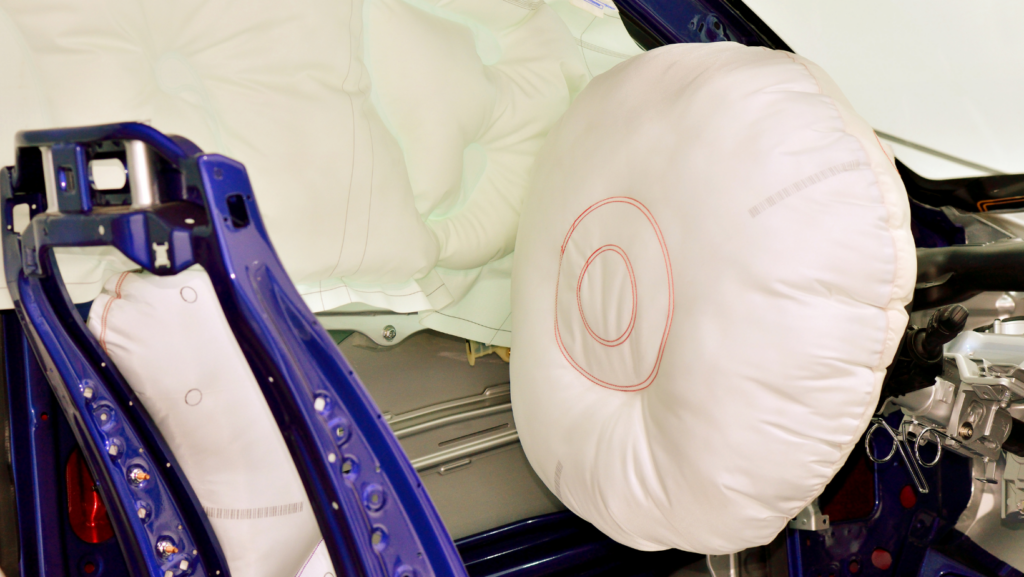
Surviving a severe car crash is a traumatic experience that leaves you with countless questions. That trauma quickly turns into frustration when you realize your vehicle’s primary safety system failed to protect you. You trusted your electric vehicle to deploy its airbags on impact, but instead, you are left dealing with severe, preventable injuries.
Automakers have spent decades perfecting airbag technology for a simple reason: it works. In fact, frontal air bags have saved more than 50,000 lives over a 30-year period. When that basic promise of safety is broken, the consequences are often catastrophic.
Figuring out why an electric vehicle’s airbag stayed shut is rarely straightforward. The cause is often buried deep within complex computer systems, software algorithms, and high-voltage wiring, rather than a simple mechanical break. Automakers frequently try to blame the angle of the crash or the severity of the impact to avoid taking responsibility.
Why Didn’t My EV’s Airbag Deploy?
To understand why your airbag failed, you first need to know when it is legally and mechanically supposed to activate. Federal regulations require automakers to calibrate their safety systems to protect occupants during specific impact scenarios.
If your collision met or exceeded these federal deployment thresholds and the steering wheel or dashboard stayed closed, a system failure occurred. Traditional gas-powered cars typically experience airbag failures due to defective crash sensors, faulty inflators, or severed communication wires. Electric vehicles share these exact same risks, but they introduce an entirely new layer of digital and electrical complexity.
When an electric vehicle detects a collision, it instantly triggers a high-voltage battery shutdown protocol. This is a vital safety feature designed to prevent electrical fires and protect occupants from electrocution. Sometimes, this rapid shutdown inadvertently interrupts the airbag deployment logic. If the power cuts out a fraction of a second too early, the airbag inflator never receives the signal to fire.
Software coding errors represent another massive risk for EV owners. Modern electric vehicles function like computers on wheels. A simple coding glitch can cause the vehicle’s central processing unit to misinterpret incoming crash data. If the software incorrectly reads a severe impact as a minor fender-bender, it will actively tell the airbags to stay shut.
|
Defect Type |
How it Causes Airbag Failure in an EV |
|
Crash Sensor Failure |
Sensors are placed in the wrong location or suffer from water intrusion, failing to detect the severity of the impact. |
|
Software/Logic Glitches |
The EV’s central computer misinterprets sensor data and incorrectly decides an airbag deployment is unnecessary. |
|
Wiring & Communication |
High-voltage wires sever on impact before the signal can travel from the front bumper sensors to the airbag inflator. |
|
Battery Shutdown Conflict |
The EV’s emergency battery disconnect engages too quickly, killing power to the airbag module before it can deploy. |
The Chain of Liability: Who is Legally Responsible?
After a crash, your first instinct is likely to blame the at-fault driver who hit you. While you can certainly pursue a standard negligence claim against them for causing the accident, standard negligence does not address your malfunctioning safety equipment. To hold a company accountable for a defective airbag that worsened your injuries, you rely on a legal concept called strict product liability.
Strict product liability is a powerful legal tool for injured consumers. It means you do not have to prove the automaker was careless or intentionally negligent. You only have to prove the product was defective, you used it as intended, and the defect directly caused your enhanced injuries.
An electric car accident attorney handles this by investigating the vehicle’s specific safety design and manufacturing records to pinpoint where the equipment failed. Instead of just chasing a settlement from another driver, this approach targets the corporations that released a defective vehicle onto the market. By proving the car itself was at fault, a legal team ensures that victims are compensated for the long-term costs associated with specialized medical care or permanent disabilities caused by the vehicle’s own malfunctions.
This legal framework focuses on the “chain of distribution.” Every single company involved in bringing that defective airbag to your steering wheel shares liability. You can file lawsuits against the primary EV manufacturer who sold you the car, the third-party supplier who built the physical airbag module, and even the tech company that programmed the deployment software.
When your legal team investigates the chain of distribution, they are looking for two specific types of failures: design defects and manufacturing defects. A design defect means the airbag system was engineered poorly from the start. Even if it was built perfectly on the assembly line, the flawed blueprint makes it dangerous.
A manufacturing defect means the original design was safe, but a mistake happened during production. Perhaps a worker installed the wrong sensor, or a machine crimped a vital communication wire. Massive manufacturing defects are a common, documented reality in the auto industry. Federal safety data proves this consistently.
According to regulators, approximately 67 million Takata airbags have been recalled because they can explode when deployed. That massive recall demonstrates how easily a single parts supplier can compromise the safety of millions of vehicles. It also highlights why holding these corporations financially liable is the only way to force safety improvements across the industry.
Immediate Steps to Preserve Your Auto Defect Case
Building a strong product liability case against a massive automaker requires undeniable physical evidence. Automakers employ aggressive legal teams whose primary goal is to shift the blame away from their product. If you fail to protect your evidence in the days immediately following the crash, your case could fall apart before it even begins.
1. Preserve the Crashed Vehicle
This is your absolute top priority. You must secure the vehicle exactly as it was immediately following the collision. Do not allow your insurance company to scrap the car, send it to a salvage yard, or authorize any repairs. If the vehicle is fixed or destroyed, the physical and digital evidence of the airbag failure is permanently lost. Move the car to a secure, covered storage facility and instruct the owner that no one is allowed to inspect it without your lawyer present.
2. Secure the Black Box Data
Every modern electric vehicle is equipped with an Event Data Recorder. This device acts similarly to the black box found on commercial airplanes. It records the exact parameters of the crash, including your vehicle’s speed, braking status, steering angle, and the exact sensor readings milliseconds before impact. Downloading and preserving this digital footprint proves to the automaker that your crash met the required threshold for an airbag deployment.
3. File an Official Safety Report
Creating a federal paper trail validates your claim and alerts safety regulators to a potentially deadly defect. Any air bag that fails to deploy in an injury-producing crash should be reported to NHTSA’s Office of Defects Investigation for potential recall evaluation. Filing this report creates an official, time-stamped record of your system failure.
4. Gather Comprehensive Documentation
You need detailed records that directly link the airbag failure to the severity of your injuries. Obtain the complete police report, making sure the responding officer noted the non-deployment in their official narrative. Next, secure all your medical records. You want medical imaging and doctor’s notes that specifically document injuries caused by a lack of restraint, such as facial trauma from hitting the steering wheel or chest injuries from slamming against the dashboard.
Conclusion
An airbag failure during a severe crash is not a stroke of bad luck. It is a serious, life-threatening product defect that warrants immediate legal scrutiny. When automakers heavily market the advanced safety features of their electric vehicles, they have a legal duty to ensure those systems actually protect drivers in the real world.
Taking on massive automotive brands, global parts suppliers, and their corporate insurers is not something you can do alone. It requires a dedicated legal team capable of digging deep into complex software codes, crash data, and electrical engineering to prove exactly why your vehicle failed you.