
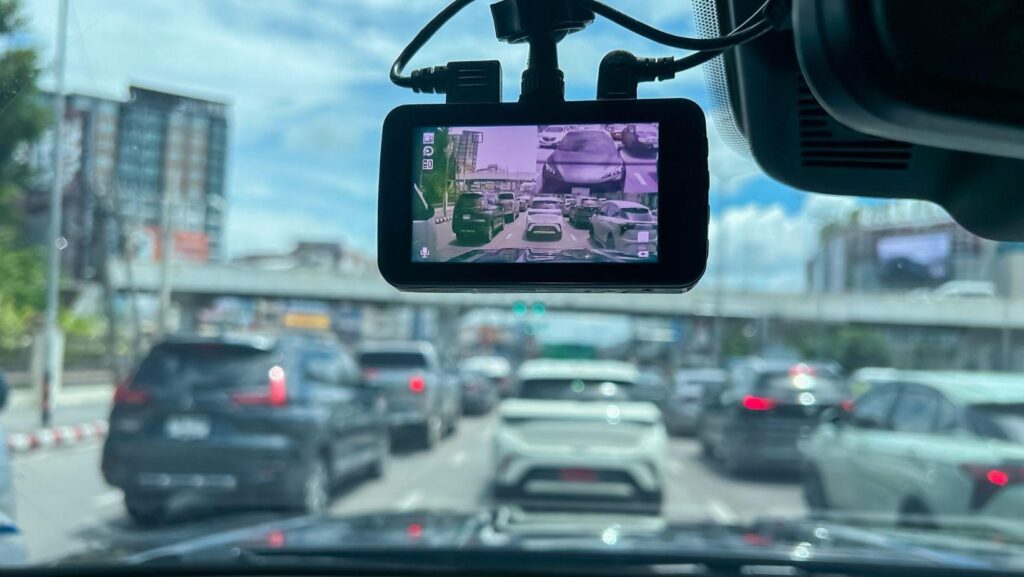
A decade ago, dash cams were a niche gadget mostly associated with Russian highway videos going viral online. Now they’re showing up on ordinary commutes everywhere, and for good reason — they help settle arguments about what actually happened after a crash, a near-miss, or one of the many road rage issues that can escalate faster than you’d expect.
It’s a small piece of hardware, but it’s changed the way accidents get investigated and, honestly, the way a lot of people drive when they know they’re being recorded.
What Is a Dash Camera and How Does It Work?
A dash camera is a compact device mounted on the windshield or dashboard that records video continuously while the car is running. Most models use loop recording, which means older footage gets overwritten automatically unless the camera detects something worth saving — a hard brake, a sudden impact, that kind of thing.
Basic Features to Know
Not every dash cam is built the same, but the good ones tend to share a few core features:
You don’t need to be tech-savvy to use one. Most plug straight into a 12V outlet, and if you want something more permanent, a hardwired kit takes maybe twenty minutes to install.
Why Driver Accountability Has Become Such a Big Deal
Roads are more crowded than they used to be, drivers are more distracted, and — let’s be honest — a lot more people are willing to drive aggressively than they were a generation ago. Objective proof of what happened in a given moment protects the honest driver and makes it a lot harder to get away with a fabricated story.
The Insurance Fraud Problem
Staged accidents and inflated injury claims cost insurers billions every year, and that cost eventually lands on regular policyholders through higher premiums. According to the Insurance Information Institute, fraud losses across the industry now run well into the hundreds of billions annually — a scale that makes objective evidence more valuable than ever. A dash cam takes the guesswork out of the equation. If someone brake-checks another driver on purpose or lies about who ran the light, footage usually ends the argument before it starts.
The “He Said, She Said” Problem
Without video, accident claims often boil down to two conflicting stories, and someone — an adjuster, a cop, sometimes a judge — has to decide who’s more believable. That’s not a great system. Dash cam footage cuts through it. There’s no ambiguity when the whole thing is on tape.
How Dash Cams Help After a Car Accident
Dash cam footage can establish fault almost immediately, which matters more than people realize when a claim is on the line.
What Footage Can Show
A Real-World Example
Picture this: you’re stopped at a red light and get rear-ended. The other driver insists the light had just turned green — a claim that’s impossible to disprove without evidence. With dash cam footage, there’s no debate. It’s timestamped, it’s clear, and insurance companies tend to move faster on claims backed by video, mostly because it saves them the trouble of investigating from scratch.
Dash Cams and Aggressive Driving
Accidents aren’t the only thing dash cams are good for. They’re proving just as useful for documenting dangerous behavior on the road — tailgating, brake-checking, weaving through lanes, and the kind of confrontations that sometimes break out at intersections.
That matters because aggressive driving isn’t some rare, abstract concern — it’s a documented safety problem with real legal consequences attached to it. When someone loses their temper behind the wheel, timestamped video can turn a messy dispute into a clear, defensible record of what actually went down.
Legal Considerations Every Driver Should Know
Dash cams are useful, but they’re not a blank check to record whatever, wherever you want.
Privacy Laws Vary by State
Some states require two-party consent before you can legally record audio, which can complicate things if your dash cam picks up conversations inside the vehicle. Video of public roads, on the other hand, is generally fair game across the U.S.
Footage Can Be Used Both Ways
Here’s the part people sometimes forget: dash cam footage doesn’t automatically work in your favor. If it shows you speeding, on your phone, or otherwise at fault, that footage can just as easily be used against you. Once a camera’s rolling all the time, it pays to actually drive like it.
Choosing the Right Dash Cam for Your Needs
There’s no single “best” dash cam — the right one depends on how and where you drive.
Quick Buying Tips
Final Thoughts: A Small Device With a Big Impact
Dash cameras have gone from a novelty item to something close to standard equipment for a lot of drivers — and it’s easy to see why. They protect people from fraudulent claims, speed up the insurance process, and give aggressive or reckless driving a paper trail it never used to have. As traffic keeps getting worse, that kind of accountability stops being a luxury and starts being a genuinely practical safeguard.
Whether you’re trying to protect yourself from a bad-faith claim, document something that scared you on the freeway, or just want a little more peace of mind on your commute, a dash cam is one of the easiest upgrades you can make to your car.